
Outdoor Cat Houses
An outdoor cat house gives a porch cat, a barn cat, or a feral colony a dry, draft-free spot to sleep, out of the wind, rain, and snow.
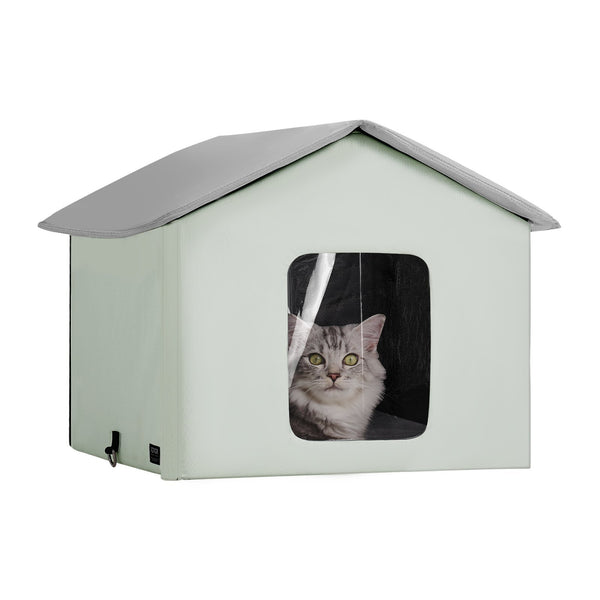
Heated Cat House, Outdoor Kitty Shelter
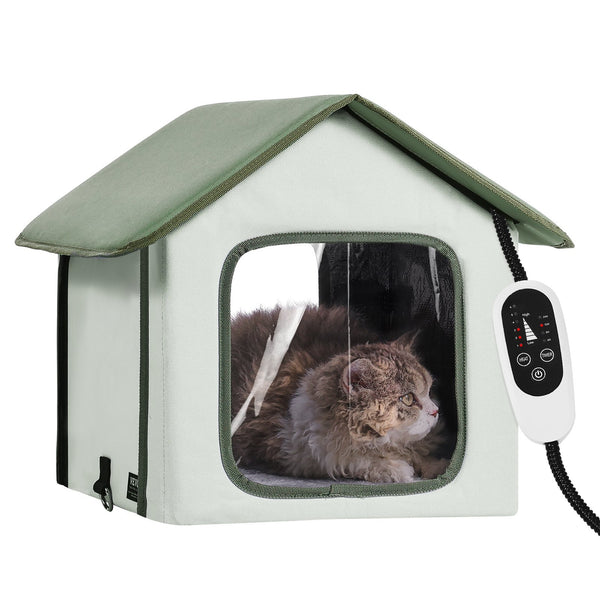
Elevated Heated Cat House Outdoor Kitty Shelter Timer, Green
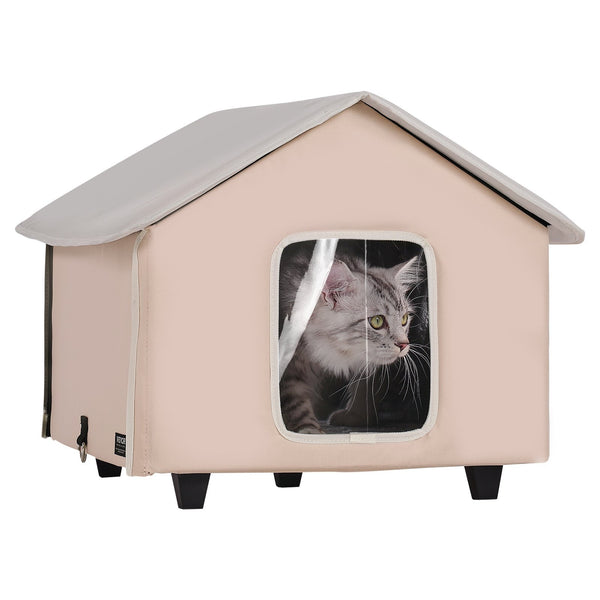
Elevated Heated Cat House Outdoor Kitty Shelter Timer, Brown
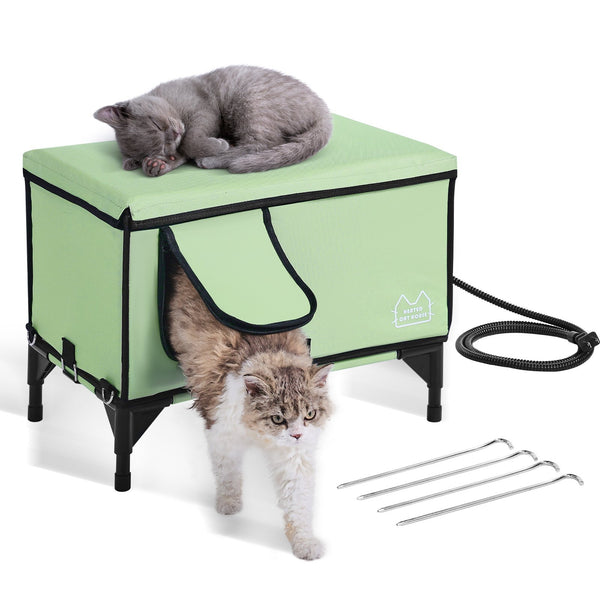
Elevated Heated Cat House Cuboid Kitty Shelter Adjustable, Large
A Dry, Safe Place
To Ride Out The Weather
An outdoor cat house gives a porch cat, a barn cat, or a feral colony a dry, draft-free spot to sleep, out of the wind, rain, and snow.
Need it warmer? See heated cat houses. Snow or wet ground? See elevated cat houses.
Heated outdoor shelters, including models raised on legs and models with a heating timer.
An Outdoor Shelter Has To Do Three Things
Keep the cat dry, hold in their warmth, and keep them safe from anything that wants in. Miss one and the cat sleeps somewhere else.
What Keeps The Inside Dry
A wet shelter is worse than none: damp bedding pulls heat out of a cat faster than cold air does. Water gets in from three places: the roof, the doorway, and the ground.
Smaller Is Warmer, And Straw Beats Blankets
A cat heats its shelter with its own body. In a big box that heat drifts off; in a snug one it stays around the cat. Buy for the cats who will use it, not for extra room.
Fill it with loose straw. Straw stays dry and cats burrow into it. Blankets, towels, and hay soak up moisture and stay wet, which chills the cat instead of warming it.
This is the standard advice for community cat shelters from Alley Cat Allies, and it applies just as much to a store-bought house as a homemade one.
- One cat: the smallest house that lets it turn around and curl up.
- Two or three friendly cats: a larger or two-story house.
- Hard freezes: add heat with a heated cat house rather than a bigger one.
Set It Up In Four Steps
Where the house goes decides whether the cat moves in.
Which Shelter For Which Cat
Outdoor Cat House FAQs
Will a cat actually use an outdoor cat house? +
Most will once it smells safe and stays dry. Put it where the cat already rests, add a handful of straw, and leave it alone for a week. A shelter that is too big, too exposed, or opens into the wind is the usual reason a cat walks past it.
What bedding should go inside? +
Loose straw. Cats burrow into it, and it stays dry. Blankets, towels, and hay soak up moisture and hold it against the cat, which makes the shelter colder, not warmer. Alley Cat Allies gives the same advice for community cat shelters.
Does an unheated house keep a cat warm enough? +
An insulated house holds the cat's own body heat, and for many winters that is enough. Where nights stay well below freezing, a heated cat house with a low-wattage pad adds a steady floor of warmth.
Where is the best place to put it? +
Against a wall or under a porch roof, with the door turned away from the wind and a few inches off the ground. Quiet, out of foot traffic, and somewhere you can see it without walking up to it every day.
How many cats fit in one house? +
Size it for the cats who will share it, not for extra room. Two or three friendly cats can share a larger house or a two-story one. Cats that do not get along need separate shelters.
How do I keep raccoons and other animals out? +
A small doorway does most of the work, and a second exit means a cat is never trapped if something blocks the main door. Keep food a short walk away from the shelter, never inside it, so the house does not draw wildlife.
Can an outdoor cat house be used in summer? +
Yes. Swap the straw out, open any vents, and move it into shade. The same roof that keeps snow off keeps rain and midday sun off a porch cat in July.
How do I clean it? +
Replace the straw whenever it looks damp, dirty, or flattened, and at least a few times a season. Wipe the floor with a mild cleaner and let it dry fully before new straw goes in.
Heated, insulated, or elevated: which do I need? +
Start with insulated. Add heat for hard freezes (heated cat houses), and add legs where snow, rain, or cold ground is the problem (elevated cat houses). Many shelters here combine two of the three.
Explore related categories: heated cat houses, elevated cat houses, and indoor cat houses.