
Cat Exercise & Activity
Indoor FitnessIndoor Cats Were Built To Hunt A wild cat sprints, stalks, and pounces dozens of times a day chasing prey. Your indoor cat has the exact same engine and a living room with nowhere to run it. That unspent energy does not disappear — it shows up as 3 a.m. zoomies, knocked-over glass...
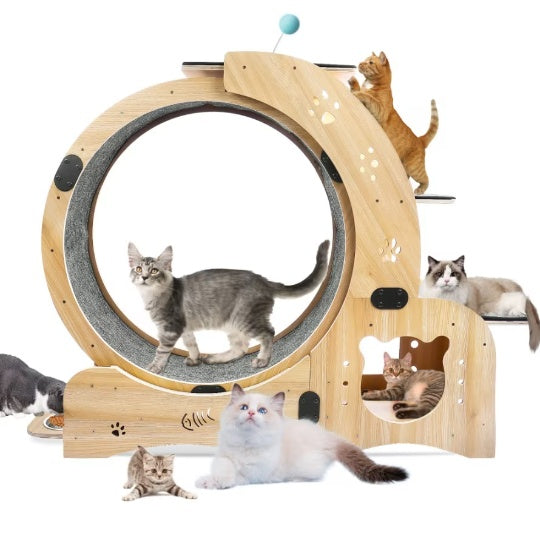
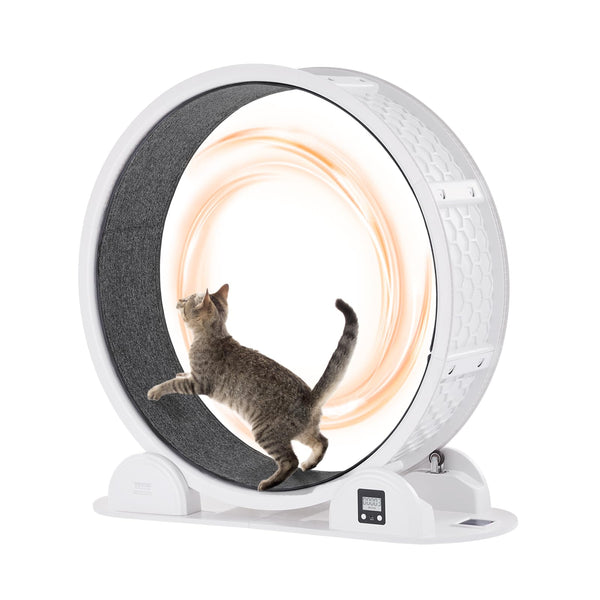
Indoor Cats Were Built To Hunt
A wild cat sprints, stalks, and pounces dozens of times a day chasing prey. Your indoor cat has the exact same engine and a living room with nowhere to run it. That unspent energy does not disappear — it shows up as 3 a.m. zoomies, knocked-over glasses, and a slowly expanding waistline.
An exercise wheel or activity setup gives that engine somewhere to go. Cats learn to run, sprint, and burn real calories on their own terms. Our collection runs from quiet wooden wheels to full climbing-and-fitness frames.
Pair a wheel with a cat tree or tower so your cat has both a track to run and a summit to claim.
Cat Exercise Wheel FAQs
Will my cat actually use a wheel?
Most do, especially younger and high-energy cats, though it takes a little coaxing at first. Introduce it slowly with toys and treats near where they already play. Some cats take to it in minutes; others need a week or two. Active breeds like Bengals often love it almost immediately.
Are cat wheels noisy?
Quality wheels — especially solid-wood models on a level floor — run quietly enough to use overnight. Cheaper plastic units can rattle. Setting the wheel on a hard, flat surface keeps it spinning smoothly and quietly.
What size wheel does my cat need?
As a rule, the diameter should be large enough that your cat's back stays roughly level while running — usually 40 inches or more for an average adult. Too small a wheel forces an uncomfortable arch, and most cats will simply refuse it.
Is a wheel safe for my cat?
Yes, when it is built well. Look for an enclosed running surface, a stable weighted base, and minimal gaps that could catch a paw or tail. Supervise the first few sessions, and let your cat hop on and off freely rather than forcing it.